An Introduction To Compiler Writing
Publisher: Macdonald and Janes
Format: Hardback
ISBN: none
Imagine, if you will, a world in 1975, where disco balls twinkled under the fluorescent lights of a burgeoning tech revolution. Amidst the vibrant chaos of vinyl records and questionable hairstyles emerged a tome that promised to unravel the mysteries of language processing: "An Introduction to Compiler Writing" by the illustrious JS Rohl. This book is not merely an introduction; it’s an invitation to a grand adventure through the labyrinthine mind of coding. A world where binary reigns supreme, and every semicolon is a tiny bastion of order in an otherwise chaotic realm of ones and zeroes.
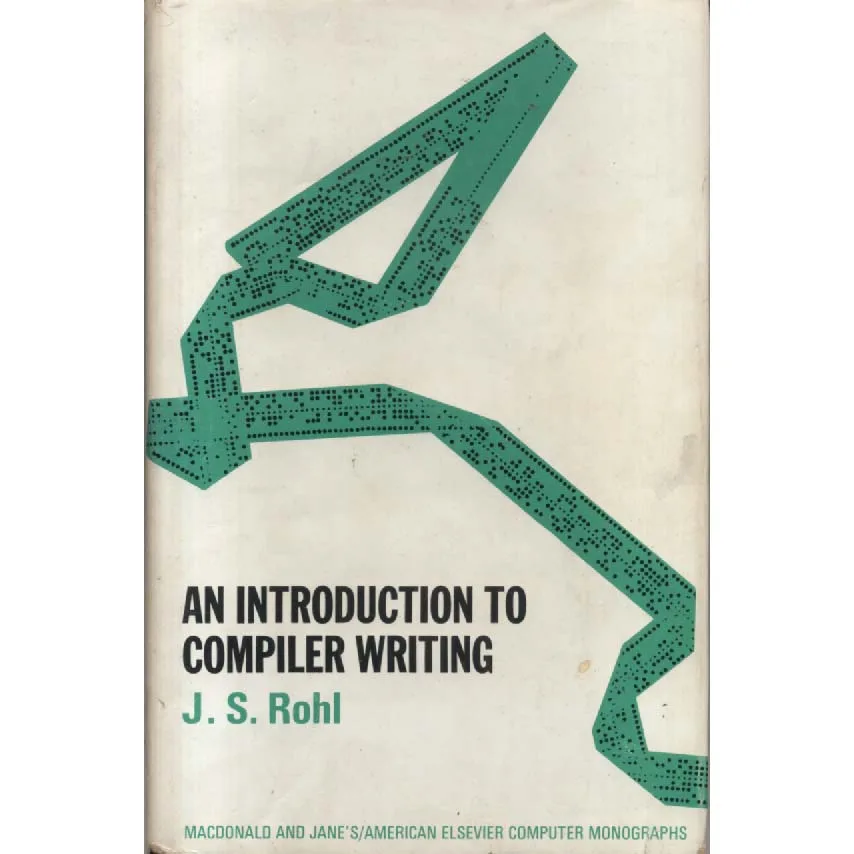
With a charmingly unassuming cover that might have been designed during a particularly uninspired afternoon tea, this book beckons the intrepid programmer with promises of enlightenment. One cannot help but wonder if Rohl was composing this opus while sipping Earl Grey and contemplating the existential dread of syntax errors brought on by caffeine overdoses. Either way, the book is filled with the kind of knowledge that leaves one feeling either profoundly enlightened or wholly perplexed. Many have journeyed through its pages, exiting either as compiler wizards or just slightly dazed individuals who now understand what “parsing” means but not how to apply it without breaking into a cold sweat.
For those who think compiler writing is merely about shuffling bits of code around like a deck of cards at a pub, prepare to have your expectations shattered! Rohl delves into such labyrinthine concepts that you may find yourself questioning why you ever thought that programming was a straightforward affair. Who knew that lexical analysis could be as complicated as a family reunion? Or that parsing techniques could rival the intricate dance of a fox on a hot tin roof? One might argue that this book is a bit like trying to assemble IKEA furniture without the instructions—frustrating but oddly satisfying once the dust settles.
As you leaf through the chapters, you might encounter such delightful sections as:
- The Syntax of Syntax: A Love Story
- Lexical Analysis: A Cautionary Tale
- Parsing Strategies: All You Need Is a Stack
- Code Generation: Because Why Not?
- Optimisation: The Art of Making Things Confusing
In true 1970s fashion, Rohl’s prose is as dense as an overcooked Yorkshire pudding, bursting with technical jargon that could intimidate even the most seasoned software engineer. The pages are peppered with diagrams that look like they were crafted during the dawn of the graphical user interface, evoking an era where creativity clashed with clunky design in the most thrilling of ways. The book’s charm lies in its imperfection—like a delightful puzzle missing a piece or a cup of tea with a dash too much milk.
Condition: Good. This copy has been lovingly preserved, with only the faintest of coffee stains adorning its pages—testament to the many late nights spent grappling with its content. The spine creaks nostalgically, echoing the age of floppy disks and punch cards, and the corners exhibit just the right amount of wear, suggesting that it has seen more than a few programming marathons in its day.
Whether you are an aspiring compiler writer, a seasoned coder looking for a nostalgic trip down memory lane, or simply an individual with too much time and an insatiable curiosity, "An Introduction to Compiler Writing" offers a unique glimpse into the mind of a programmer from an age gone by. At the very least, it serves as a conversation starter at parties—"Oh, you’ve never discussed lexical analysis over a pint? You clearly haven’t lived!" So grab this quirky relic and prepare for a journey into a world where every misstep is just another opportunity for learning, courtesy of Crappy Old Books.
Keep browsing: See more IT books Other books by JS Rohl